Florida and Louisiana account for most
Adult males; females significantly smaller
Up to 70+ in captivity
Jaws among fastest in the animal kingdom
Classification
The American alligator belongs to the family Alligatoridae, which contains only two living species of true alligators: the American alligator (Alligator mississippiensis) and the critically endangered Chinese alligator (Alligator sinensis). The family also includes all six living caiman species of Central and South America. Alligatoridae diverged from Crocodylidae (the true crocodiles) approximately 80 million years ago.
The species name mississippiensis refers to the Mississippi River, though the animal's range extends far beyond that waterway. Fossil evidence shows alligators have inhabited North America for at least 37 million years, with ancestors even older. The American alligator is essentially unchanged from ancestors that coexisted with non-avian dinosaurs.
Physical Description
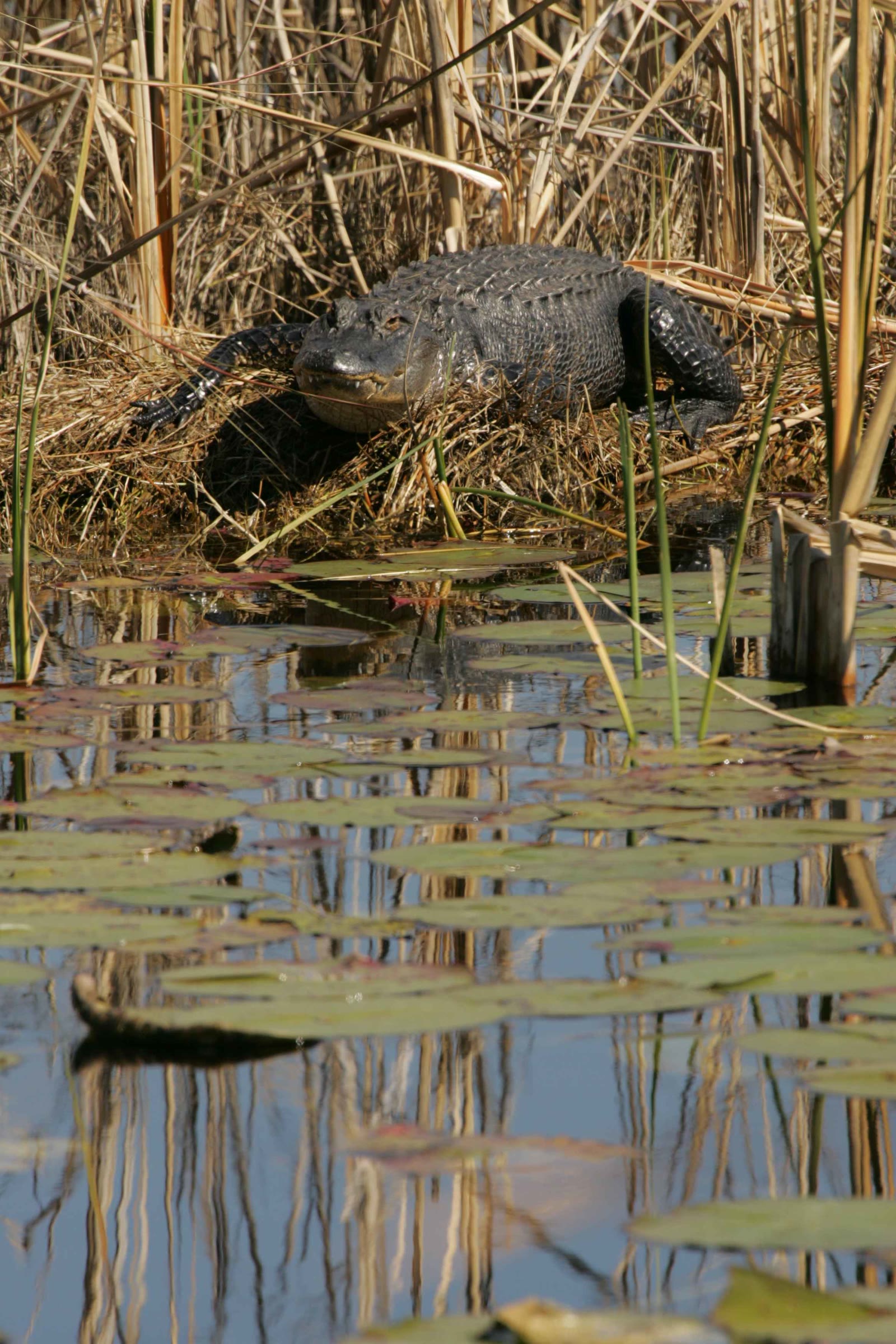
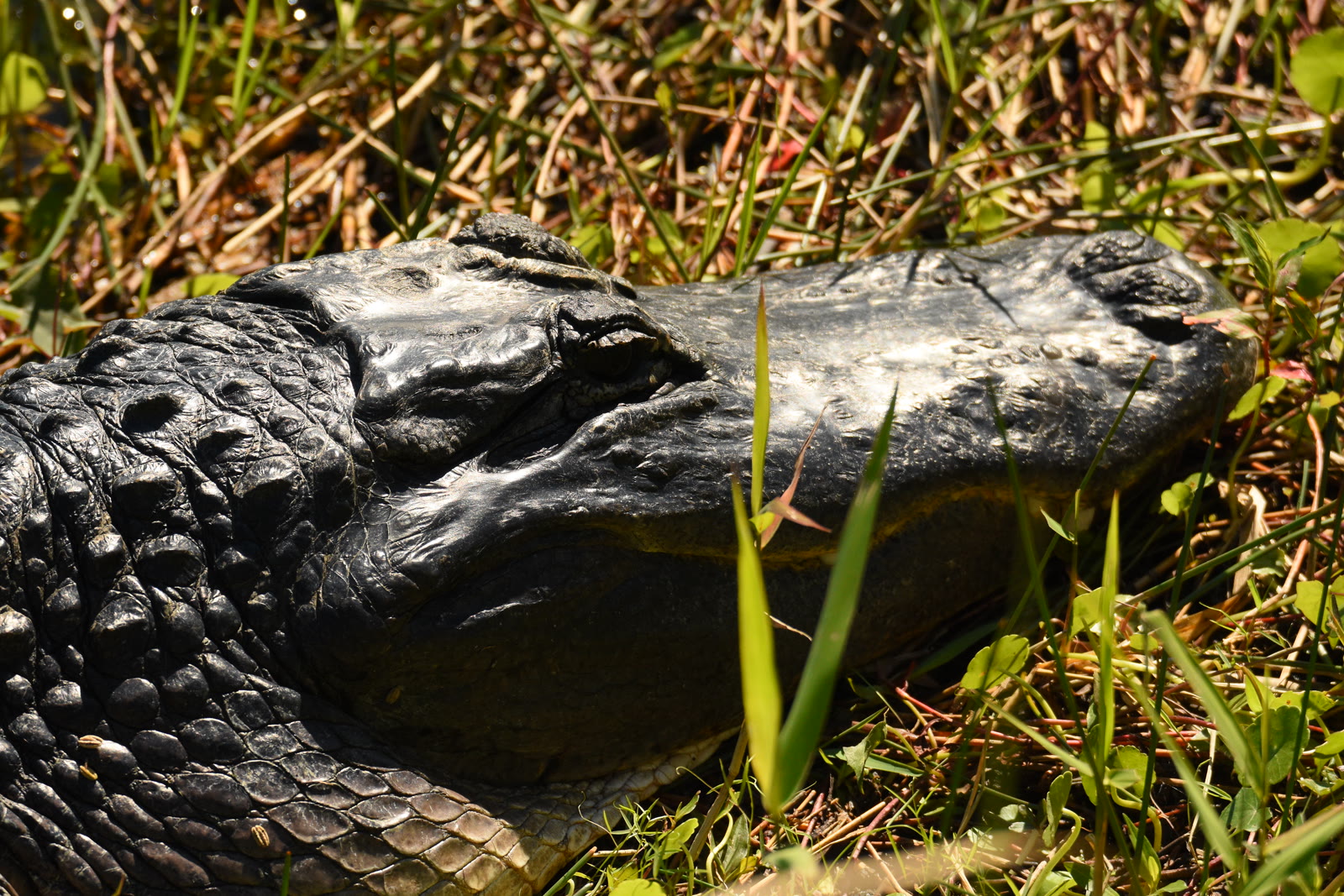
Adult American alligators are powerfully built with a broad, rounded snout that is the key visual distinction from crocodiles. The dorsal surface is covered in osteoderms, bony plates embedded in the skin, arranged in rows. Adults are typically dark grey to nearly black on top and cream to yellowish-white on the underside. Hatchlings and juveniles display bright yellow cross-banding on a black background; this fades to the adult pattern by the time they reach around 1.2 metres.
Sexual dimorphism is pronounced. Males grow significantly larger than females. An exceptional male may reach 4.6 metres (15 feet) and weigh 450 kg (1,000 lbs), though most adults are 3 to 4 metres and 180 to 270 kg. Females rarely exceed 3 metres and typically weigh 60 to 90 kg. The tail accounts for approximately half the total body length and is the primary swimming organ.
Alligators are ectotherms and regulate body temperature behaviourally: basking in sun to warm up, retreating to water or shade to cool down. They are most active when air and water temperatures are between 25 and 35 degrees Celsius. Below 10 degrees Celsius, they become torpid and stop feeding.
Range: Florida, Louisiana, and Beyond
American alligators occur throughout the southeastern United States. The range spans from the coastal plain of North Carolina and Virginia in the north, west through Georgia, Florida, Alabama, Mississippi, Arkansas, Louisiana, Oklahoma, and Texas. The greatest densities occur in Florida and Louisiana, which together are estimated to hold around 4 million of the total US population of approximately 5 million.
Year-round. Lakes, rivers, wetlands statewide. Increasing urban encounters.
Largest single-state population. Atchafalaya Basin, coastal marshes.
Eastern Texas bayous and coastal marsh. Sabine Lake area highest density.
Alligators are habitat generalists within freshwater. They use marshes, swamps, rivers, lakes, ponds, and even drainage ditches and golf course ponds in suburban areas. They dig depressions called "alligator holes" that retain water during dry seasons, creating microhabitats used by fish, turtles, birds, and other wildlife.
Diet and Feeding
American alligators are opportunistic apex predators. Diet changes dramatically with age and size. Hatchlings and juveniles eat insects, small fish, frogs, and crayfish. As they grow, prey size increases to include larger fish, snakes, turtles, small mammals, and birds. Large adult males have been documented eating deer, black bear, bobcats, and Florida panthers.
The wide, flat jaw and powerful bite are adapted for crushing hard-shelled prey. Turtles are a major component of the adult diet in Florida. The largest alligator in the Erickson 2012 study bit at 9,452 newtons (2,125 lbf), the strongest of any alligator or caiman measured and enough to shatter the shell of any turtle species in their range.
Alligators also engage in stomach-stone behaviour: intentionally ingesting rocks or other hard objects that may aid digestion or help regulate buoyancy. They are ambush predators, lying motionless at the water's surface and striking with explosive speed. The "death roll" is used to tear large prey into swallowable pieces.
Reproduction and Nesting
Alligators reach sexual maturity at approximately 1.8 metres, which takes 10 to 12 years. Mating occurs from April through June. Males produce infrasonic bellowing during courtship, vibrations below human hearing that cause the water surface to "dance." Females select mates and may mate with multiple males.
Females build mound nests of vegetation, mud, and debris near the water's edge, typically 0.6 to 0.9 metres high and 1.5 to 2 metres in diameter. Between 32 and 46 eggs are laid in late June or July. The nest temperature determines the sex of the hatchlings: temperatures above 34 degrees Celsius produce males, below 30 degrees produce females, and intermediate temperatures produce mixed broods.
American alligators are among the most maternally attentive of all reptiles. Females guard nests aggressively and assist hatchlings in digging out at around 65 days. They carry hatchlings to water in their mouths and provide maternal care for up to two years. Juvenile survival in the wild is nevertheless low: approximately 80% of hatchlings die within the first year.
Conservation: A Recovery Story
The American alligator's recovery is one of the most cited successes in US conservation history. By the mid-20th century, unregulated hunting for hides had dramatically reduced populations. Alligator leather was in high demand for bags, shoes, and belts. The species was listed as Endangered under the precursor to the Endangered Species Act in 1967.
Federal protection halted the hide trade. Within two decades, populations had rebounded sufficiently that the IUCN downlisted the species to Least Concern in 1996. Today, regulated hunting of alligators is permitted across most of the range under management plans administered by state wildlife agencies. Louisiana has the largest alligator management programme in the world, with both a wild harvest quota and extensive commercial farming operations.
Current threats include habitat loss from wetland drainage, road mortality, and interactions with urban communities. Climate change presents a long-term concern by potentially skewing nest sex ratios toward males in hotter conditions. Despite these pressures, the American alligator population is considered stable and not at risk.